

Gender equality is fundamental to climate justice; understand why.
Study highlights the main challenges in integrating a gender perspective into climate policies, whether in terms of underfunding or insufficient data monitoring.
Integrating a gender perspective into global policies is crucial to addressing challenges such as climate change, sustainable development, and human rights. Women and gender minorities suffer disproportionate impacts from environmental crises due to historical inequalities that limit their access to resources, education, and political participation. This vulnerability manifests itself in various areas: increased workload in contexts of scarcity, risks of violence in forced displacement, girls dropping out of school, and income loss in fragile sectors such as agriculture and fishing.
At the same time, women play a central role as agents of resilience and transformation, leading practices of adaptation, environmental conservation, and sustainable management. Recognizing and strengthening this leadership is essential to promoting social justice and building more sustainable societies. This effort is already reflected in agreements such as the UN Framework Convention and the Paris Agreement, but faces persistent challenges, such as political underrepresentation, structural violence, and data gaps, requiring joint action between governments, civil society, and international organizations.
“The recognition that women and girls are more vulnerable to the impacts of climate change has led to the creation of initiatives to ensure their equal and meaningful participation in climate policies,” notes Thiago Mendes, author of the study. “But despite the progress, some challenges persist. Women still represent less than 30% of national delegations, many countries do not produce gender-disaggregated data, and cultural barriers limit women's access to resources and decision-making. These points show that, although there is progress, it is necessary to expand efforts to make climate action more just, effective, and inclusive,” adds Luciano Schweizer, one of the co-authors of the study.
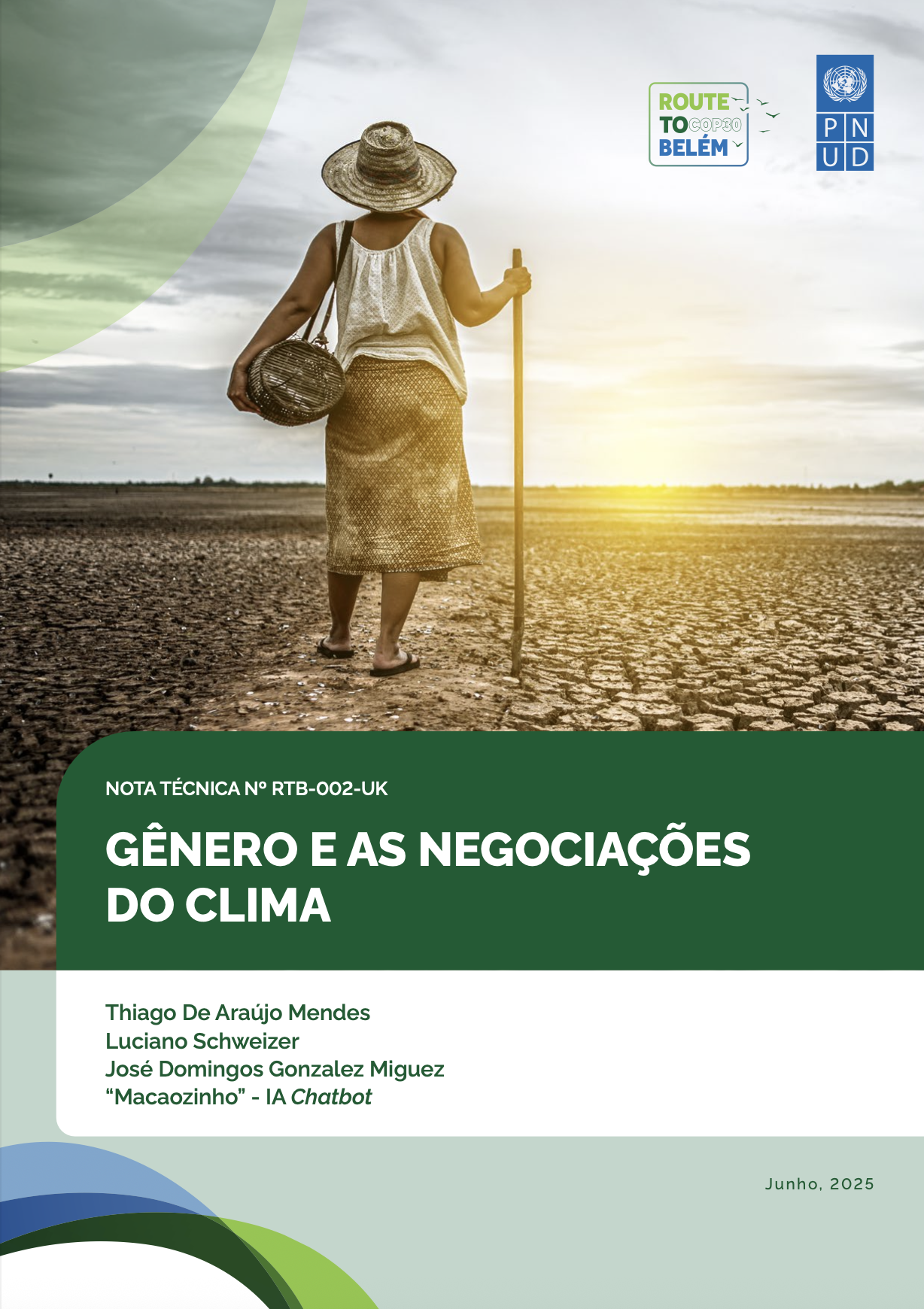
Climate and gender in Brazil
In Brazil, the integration of gender and climate is gaining ground in public policies, projects, and civil society initiatives, although there is still a way to go. The National Adaptation Plan to Climate Change, from 2016, included guidelines to promote gender equality, recognizing the greater vulnerability of rural, indigenous, and quilombola women, as well as encouraging their participation in water resource management and resilient agriculture. The ABC+ Plan, from 2011, supports women's training in sustainable techniques, and Brazil's NDC, updated in 2022, mentioned gender equality for the first time as a cross-cutting principle, albeit without specific targets.
Civil society has played a significant role in this field. The Climate Observatory and the Gender and Climate Network produce research and advocate for inclusive policies, while universities develop studies on the differentiated impacts of climate change on women. A milestone in this effort was the report "Gender and Climate in Brazil" (2021), which highlighted inequalities in access to resources and information.
The topic also appears in international cooperation and climate finance. The Brazilian Development Association (ABDE), in partnership with multilateral banks, has incorporated gender and climate into its strategies, reinforcing the importance of the topic in the national development system. Furthermore, international funds such as the GCF and the Amazon Fund support projects with a gender focus.
Despite progress, structural challenges persist. Many policies suffer from discontinuity or are not implemented due to lack of resources, and there is still a lack of gender-disaggregated data to assess climate impacts. Barriers such as inequality in access to land, credit, and political participation limit women's leadership. The country is making progress in discourse and specific initiatives, but lacks national coordination, robust monitoring, and institutional support to expand the leadership of women as central agents of climate justice.
A long road ahead.
Integrating a gender perspective into climate policies has become a key pillar for promoting social justice and increasing the effectiveness of the global response to the climate crisis. However, challenges remain, particularly in the practical implementation of these guidelines. There is a lack of adequate financial resources, a need to expand technical capacity building, and a need to strengthen monitoring systems with gender-disaggregated data.
To move forward, it is necessary to align international normative frameworks with national institutional arrangements and other global agendas. This will make it possible to consolidate climate action that combines effective mitigation and adaptation with the promotion of equity, reaffirming that gender equality is not only a right, but also an indispensable requirement for a more inclusive and sustainable future.
UNFCCC milestones
O Programa de Trabalho de Lima Reforçado sobre Gênero (em inglês, “Enhanced Lima Work Programme on Gender” – ELWPG), de 2014, foi o primeiro marco da UNFCCC a reconhecer a importância de integrar igualdade de gênero nas negociações climáticas. Para operacionalizá-lo, foi criado o Plano de Ação de Gênero (em inglês, “Gender Action Plan” – GAP), que estabeleceu áreas prioritárias como participação feminina nas delegações, capacitação técnica, integração de gênero em projetos e financiamentos, coleta de dados desagregados e ampliação do acesso de mulheres a recursos. Em 2019, na COP25, esse programa foi reforçado com um GAP renovado, com objetivos de ampliar a participação das mulheres, fortalecer políticas sensíveis ao gênero, apoiar treinamentos e monitorar os avanços.
The new GAP defined five strategic areas: capacity building and knowledge sharing; gender balance and female leadership; coherence between climate and gender policies; implementation with adequate financing and technology; and monitoring with gender-disaggregated reporting. Since then, there has been progress such as greater representation of women in UNFCCC bodies, greater gender integration in Nationally Determined Contributions (NDCs) and National Adaptation Plans (NAPs), and greater involvement of organizations such as the Women and Gender Constituency in advocating for inclusive policies.
At COP28, the GAP was extended to 2028, including measures such as greater gender-sensitive tracking of climate finance and expanded support for women-led initiatives. Beyond the UNFCCC framework, countries such as Canada, Sweden, and the Netherlands, as well as multilateral funds like the Green Climate Fund, have adopted policies and requirements that strengthen the integration of gender equality into global climate action.
